

Pronoun Practice Guide & Ally Toolkit: Fostering Inclusivity for Pride Month and Beyond

  1. Home
  2. » Pronoun Practice Guide & Ally Toolkit: Fostering Inclusivity for Pride Month and Beyond

Whiteboard describing pronouns

Want to build a more inclusive workplace culture? Start with pronouns.

As part of our ongoing commitment to diversity, equity, inclusion, and belonging, we’re excited to share a Pronoun Practice Guide and Ally Toolkit designed to support LGBTQ+ individuals and empower allies through everyday, practical actions. Whether you’re celebrating Pride or striving to lead with inclusion year-round, this guide offers meaningful ways to foster a safer, more affirming environment.

Why Pronouns Matter in the Workplace

Respect and Recognition

Using someone’s correct pronouns communicates more than respect—it validates their identity and reinforces a sense of belonging.

Psychological Safety

Normalizing pronoun sharing helps reduce misgendering and builds trust. When inclusive language becomes part of your workplace culture, employees feel seen and supported.

Genuine Allyship

Small, consistent actions—like including pronouns in your email signature or Teams profile—demonstrate intentional, ongoing support of your LGBTQ+ colleagues.

Who This Toolkit Is For

  • LGBTQ+ individuals seeking tools to confidently share and affirm their pronouns
  • Allies and coworkers committed to respectful and inclusive communication
  • Managers, HR teams, and DEI leaders aiming to integrate inclusive practices into workplace culture

Pronoun Reference Chart

Pronoun Set Subject Object Possessive Adjective Possessive Pronoun Reflexive
she/her she her her hers herself
he/him he him his his himself
they/them they them their theirs themself*
ze/zir ze zir zir zir’s zirself
xe/xem xe xem xyr xyrs xemself
your pronouns ____ ____ ____ ____ ____

*Note: Some individuals prefer “themselves” instead of “themself.”

Practice tip: Fill in the final row with your pronouns—or a colleague’s—and use them in a sentence.

Example: “Alex uses they/them pronouns. Please refer to Alex as they when speaking.”

Ally Best Practices for Pronoun Inclusion

1. Model Pronoun Sharing

Lead by example in meetings, email signatures, and virtual platforms.

Example: “Hi, I’m Jordan (they/them).”

2. Ask, Don’t Assume

Use inclusive language and open-ended questions:

“What pronouns do you use?”

“How would you like me to refer to you?”

3. Normalize (But Don’t Require)

Encourage pronoun sharing during introductions or onboarding, but always make it optional.

4. Correct Gently and Move Forward

If you make a mistake, correct it simply and continue the conversation.

“Sorry, I meant she/her—thanks for your patience.”

If you hear someone else misgendering, kindly correct them:

“Just a quick reminder—Alex uses they/them pronouns.”

5. Respect Privacy

Never share someone’s pronouns, name, or gender identity without their explicit permission.

Additional Resources on Pronouns and Allyship

Building an Inclusive Culture, One Habit at a Time

Creating a culture of inclusion doesn’t require grand gestures. It starts with small, daily actions—like using someone’s correct pronouns, asking respectfully, and setting a thoughtful example for others.

This Pride Month and beyond, let’s continue the work of allyship by embracing identity-affirming practices and cultivating a workplace where everyone feels respected, seen, and valued.

Upset man holding head in hands

June is Men’s Mental Health Awareness Month — a vital time to spotlight an often overlooked but critical area of men’s wellness and mental health. At Clarvida, where health and wellness are at the core of our mission, understanding and supporting men’s mental health is essential. Mental health challenges don’t discriminate by gender, yet societal pressures and stigma around masculinity often create barriers to seeking mental health support.

Why Focus on Men’s Mental Health?

Men face unique challenges when it comes to mental health. According to the American Foundation for Suicide Prevention, men die by suicide nearly four times more often than women, making this an urgent issue within workplace mental health and beyond. Many men struggle in silence due to cultural expectations around toughness and self-reliance, which contribute to mental health stigma.

Mental health conditions such as depression, anxiety, and PTSD affect millions of men across the U.S. However, men are less likely to access mental health services or share their struggles. This gap highlights the need for mental health awareness and education, especially within organizations committed to employee wellness like Clarvida.

Common Barriers to Men Seeking Mental Health Support

  • Stigma and Shame: Traditional masculinity norms often discourage men from showing vulnerability or admitting they need mental health support.
  • Lack of Awareness: Many men do not recognize symptoms of mental health conditions or may dismiss them as stress or fatigue.
  • Limited Support Networks: Men tend to have fewer close confidants or support systems, increasing risk of isolation.
  • Access Issues: Work demands, privacy concerns, and cost can prevent men from seeking professional mental health care.

Signs of Mental Health Struggles in Men

Recognizing signs of men and depression or other mental health issues can be challenging because men often express distress differently:

  • Increased irritability, anger, or aggression
  • Withdrawal from social interactions or hobbies
  • Changes in sleep patterns or appetite
  • Risk-taking or reckless behavior
  • Physical complaints like headaches or chronic pain
  • Increased substance use or alcohol consumption

How Clarvida Employees Can Support Men’s Mental Health Awareness

As a health and wellness company, Clarvida employees play an important role in fostering a workplace culture that supports mental health and breaks down stigma. Here are ways to champion men’s mental health:

1. Encourage Open Conversations

Normalize mental health discussions by sharing experiences and listening without judgment. This helps reduce stigma and builds trust.

2. Educate Yourself and Others

Take the initiative to learn about men’s mental health challenges, symptoms, and available resources to improve mental health awareness among colleagues.

3. Promote Work-Life Balance

Encourage practices like taking breaks, using flexible schedules, and prioritizing mental well-being as part of overall men’s wellness.

4. Provide Resources and Support

Ensure employees know about available mental health services, such as Employee Assistance Programs (EAP) and counseling options.

5. Check In Regularly

Simple check-ins like “How are you really doing?” can create safe spaces for men to share and access mental health support.

Self-Care Tips to Improve Men’s Mental Health

Encourage men to take an active role in their mental health through practical self-care strategies:

  • Stay physically active to boost mood and reduce stress
  • Maintain meaningful social connections
  • Practice mindfulness or meditation to support emotional wellness
  • Limit alcohol consumption and avoid substance misuse
  • Seek professional help when symptoms persist
  • Set realistic goals and celebrate small achievements

Join Clarvida’s Commitment to Men’s Mental Health Awareness Month

This June, Clarvida invites all employees to join in recognizing Men’s Mental Health Awareness Month. By fostering mental health awareness and support in the workplace, we contribute to a culture of care that benefits everyone’s well-being. Whether through conversations, sharing resources, or simply listening, each action helps break the silence and stigma surrounding men’s mental health.

References

  1. American Foundation for Suicide Prevention. Men and Suicide.
    https://afsp.org/risk-factors-and-warning-signs
  2. National Institute of Mental Health (NIMH). Men’s Mental Health. https://www.nimh.nih.gov/health/topics/men-and-mental-health
  3. Mental Health America. Men’s Mental Health. https://www.mhanational.org/mens-mental-health
  4. Mayo Clinic. Depression in Men: Signs, Symptoms, and Treatment. https://www.mayoclinic.org/diseases-conditions/depression/in-depth/depression/art-20047725
  5. Centers for Disease Control and Prevention (CDC). Suicide Prevention.
    https://www.cdc.gov/suicide/index.html

Woman looking out window

June marks PTSD Awareness Month, a crucial time to pause and deepen our understanding of post-traumatic stress disorder (PTSD). At Clarvida, we know that healing begins with awareness, compassion, and community support. This month, we want to invite you to join us in breaking down myths, ending stigma, and learning how simple acts of kindness can make a world of difference for those living with PTSD.

So, what exactly is PTSD? It’s a mental health condition that can develop after someone experiences or witnesses a traumatic event. While many people associate PTSD primarily with military veterans, the reality is that PTSD can affect anyone — survivors of abuse, accidents, violence, natural disasters, medical emergencies, or significant loss. Around 6% of adults in the U.S. will face PTSD in their lifetime, and each story is unique.

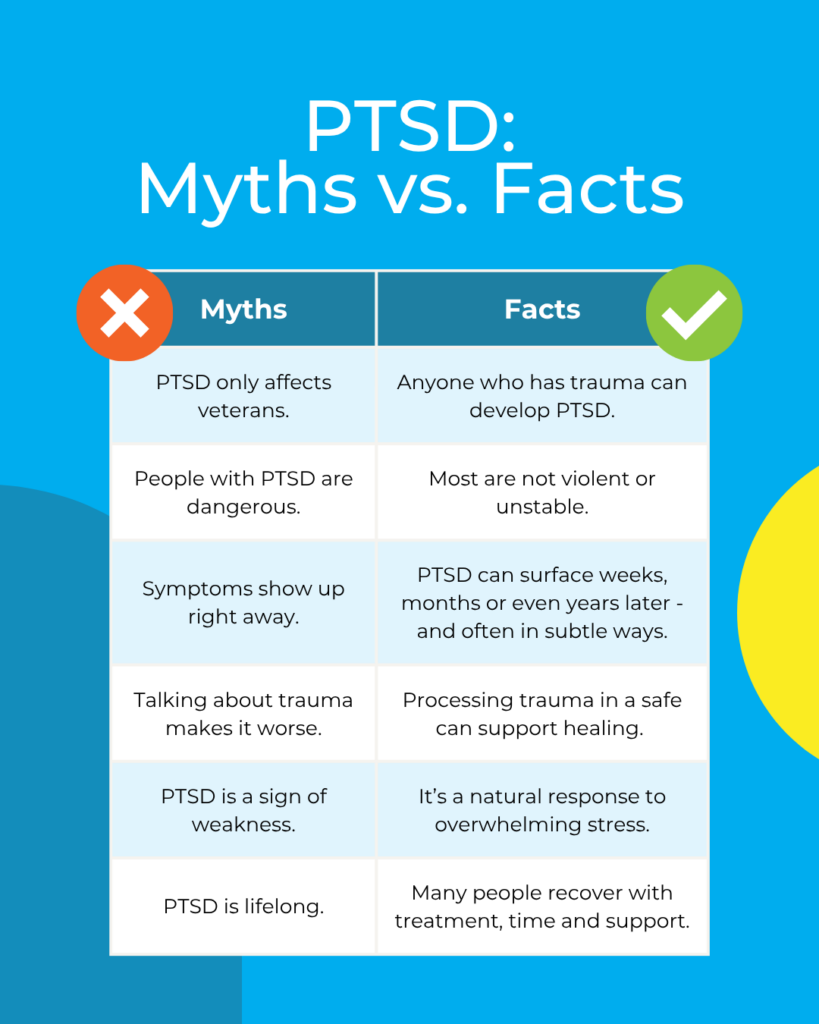
Despite how common it is, misunderstanding PTSD still runs deep. Myths about what PTSD “looks like” or who it affects can create barriers for people seeking support. For example, some believe PTSD only impacts veterans, or that people with PTSD are violent, but these simply aren’t true. In fact, PTSD symptoms don’t always show up immediately after trauma and can remain hidden for months or even years. Talking about trauma in a safe environment often helps healing — it doesn’t make things worse. And far from being a sign of weakness, PTSD is a normal response to overwhelming stress.

PTSD Myths and Facts list

Understanding these truths is the first step to fostering empathy and connection. But what can you do if someone you care about is living with PTSD? The good news is, you don’t need to be a mental health professional to make a meaningful difference. Simply listening without judgment, respecting their boundaries, and asking how you can best support them can provide immense comfort. Sometimes, just saying, “I’m here for you — no pressure to talk,” or “You’re not alone,” can help a person feel seen and understood.

It’s also important to recognize when someone might be in crisis. If they talk about self-harm, feel disconnected from reality, or struggle with basic daily needs, don’t hesitate to connect them with immediate help by calling 988 or texting HOME to 741741.

Supporting someone with PTSD can be emotionally demanding, so don’t forget to care for yourself, too. Setting your own boundaries, seeking support, and practicing self-care aren’t just acts of kindness toward yourself—they also help you be a steady source of support for others.

This month, we encourage everyone to participate in PTSD Awareness Month activities. Whether it’s wearing blue on June 27th to show solidarity for Blue for PTSD Day, sharing messages of hope in your community, or reflecting through writing about moments of safety and healing, every gesture contributes to a more compassionate and informed world.

If you want to learn more or need resources, organizations like the National Center for PTSD, NAMI Family Support, and SAMHSA Trauma & Violence provide invaluable information and support. Books like The Body Keeps the Score, Loving Someone with PTSD, and What My Bones Know offer deeper insights into the lived experiences of trauma and recovery.

Our hope this month—and every month—is that survivors of trauma feel met with understanding rather than judgment, supported rather than rushed. Healing is a journey best taken together.

If you or someone you love is navigating PTSD, remember: You are not alone. Help is available, and support is waiting.

Valentine heart with pride colors held in hand

Celebrate LGBTQ+ Pride Month with Clarvida: Honoring History, Empowering the Future

At Clarvida, we are proud to celebrate LGBTQ+ Pride Month 2025—a time to honor the rich history, resilience, and diverse voices within the LGBTQ+ community. Pride is more than just a celebration. It’s an opportunity to reflect on the journey toward equality, support inclusion in the workplace, and take meaningful steps to advocate for a more just and accepting future.

This June, we invite everyone to participate in some meaningful self-guided Pride activities. These initiatives are designed to promote LGBTQ+ education, encourage allyship in the workplace, and transform how we engage with Pride Month activities both personally and professionally.

Self-Guided Pride Month Calendar: June 28–July 3

In recognition of the Stonewall Uprising anniversary on June 28, we’re offering a weeklong series of self-guided Pride activities. These are perfect for individuals looking to engage with Pride Month remotely or at their own pace.

How It Works:

  • Each activity takes 15–30 minutes
  • Prompts are shared daily via email and in our Pride Month Slack channel
  • Participants can share reflections, creations, or advocacy actions in designated spaces
  • Activities can be completed in any order

Daily Activities:

June 28 – Stonewall Anniversary

Watch: “Stonewall Uprising” documentary by PBS

Reflect: Journal three takeaways related to the origins of the LGBTQ+ rights movement

Watch here

June 29

Read: Chapters 1–3 of Stonewall: The Riots That Sparked the Gay Revolution by David Carter

Discuss: Share insights on how these early acts of defiance still inspire today’s advocacy

Book info

June 30

Give Back: Volunteer or donate to a local LGBTQ+ youth center

Share: What action you took and why supporting youth matters

Support The Trevor Project

July 1

Create: Design a Pride-themed digital or hand-drawn poster

Post: A photo and a brief caption on what Pride means to you

July 2

Practice Allyship: Share a pronoun guide or inclusive language toolkit with three friends or colleagues

Encourage: Updating email signatures and opening conversations about inclusion

GLSEN Pronouns Guide

July 3

Take Action: Research a current LGBTQ+ policy issue

Advocate: Sign a petition or contact your representative with your support

HRC Action Center

Why Celebrating Pride Month at Work Matters

Recognizing Pride Month at work helps build a more inclusive and supportive environment for LGBTQ+ employees. It encourages open conversations, supports diversity and inclusion initiatives, and shows a visible commitment to equality. According to GLAAD, ongoing discrimination and underrepresentation remain challenges, especially for LGBTQ+ individuals in healthcare, education, and employment sectors.

By creating space for both education and action, companies can promote authentic allyship and contribute to a stronger culture of respect and belonging..

Turning Pride into Purpose

At Clarvida, we believe that celebrating Pride is not just about marking a moment—it’s about fueling a movement. Whether you’re learning, speaking up, or taking action, every effort matters.

Stand proud. Speak up. Show up.

If you have any questions about our Pride Month activities or need accommodations to participate, please reach out. We are committed to making these events accessible and meaningful for all.

At Clarvida, we’re here to support your growth—whether you’re new to the field or an experienced autism therapist. See how we help you reach your potential by helping others reach theirs.

Autism Services Career Journey

Becoming an autism therapist requires dedication, education, and hands-on experience. Here’s what that career journey typically looks like:
  • General Education: To start, you’ll at least need your high-school diploma or GED to start training for entry-level positions.
  • Higher Education: Earn a bachelor’s degree in a related field like psychology or special education.
  • Graduate Training: A master’s degree is required to practice as a licensed counselor or therapist.
  • Supervised Experience for Board Certified Behavior Analysts: You must complete supervised fieldwork under a Board Certified Behavior Analyst.

    Clarvida offers paid internships with free clinical supervision to make this step easier.

  • Certification: Pass a nationally recognized exam and meet state requirements, specifically for BCBA and RBT.
  • Continuing Education: Maintain your certification through ongoing training and CEUs—something Clarvida provides for free.

Clarvida Makes the Process Easier

Clarvida continues to grow by expanding into new communities across the country. Despite this, the need for autism services has outpaced our ability to add skilled practitioners, which means we are hiring immediately in multiple locations. Whether you’re just starting out or looking to advance, we offer support at every step of your career.

How Clarvida Supports You:
  • Paid Internships & Supervision: 
    Gain experience while earning income and receiving free clinical supervision to fulfill licensure requirements.
  • Free Continuing Education: 
    Access to skill development and CEU-eligible training through the I THRIVE with Clarvida program.
  • Mentorship & Team Support: 
    Clarvida’s structured mentorship program ensures every new hire is guided by an experienced professional.
  • Flexible Career Opportunities:
    We hire for a variety of roles, including Behavioral Health Technicians, Behavior Consultants, Board Certified Behavior Analysts, Licensed Behavior Specialists and Licensed Behavior Analysts.

Join Our Team & Make an Impact

A career in autism services is a journey—one that requires dedication, but also the right support system. At Clarvida, we provide that support through paid internships, free clinical supervision, and a workplace culture that values continuous learning and team collaboration.

Whether you’re just starting your career or seeking new opportunities, we’re here to help you thrive.

Imagine the difference you can make in someone’s life, starting with your very own.

Join us today and start making a difference

Explore Opportunities

At Clarvida, we do more than just offer jobs—we invest directly in your career and professional development. Read the blog below to see how we’re different from other employers, explore roles in this career field, and find jobs near you.

Why Choose Clarvida?

We’re different from other health and human services employers in so many ways, but some of the most important reasons to join us are that we provide the following for most roles:

  • Paid Internships & Supervision – Gain experience while earning income and receiving free clinical supervision to fulfill licensure requirements
  • Continuous training & development to expand your skills
  • Career roadmaps tailored to your professional goals
  • A supportive team environment that values your contributions
  • Flexible work options to help balance your personal and professional life

Popular Roles in Autism Services

We offer a variety of roles based on your training, licensure, and career aspirations.
Here are some of the key positions available at Clarvida:

Behavior Health Technician (BHT)

As a Behavioral Health Technician, you’ll work one-on-one with children and adolescents (ages 2-24) experiencing emotional and behavioral challenges while also:

  • Implementing behavioral support strategies
  • Teaching coping skills and promoting independence
  • Working in schools, homes, and community settings

You get to do different things all the time and continue to learn
and grow right along with the people that we help. So, it’s a good place to work.”

—Alicia, Clinical Director
 
Behavior Consultant (ABA)

Behavior Consultants play a key role in designing and implementing behavior plans for children and young adults while:

  • Conducting assessments to identify behavioral needs
  • Developing and overseeing Individualized Treatment Plans (ITPs)
  • Collaborating with families and other professionals to ensure client success

“They’re going to support you. There’s always somebody you can go to if you need support.
So, if you want to do this, come here to do it well.”

—Casey, State Clinical Director
 
Board Certified Behavior Analyst

As a Board Certified Behavior Analyst, you will coordinate treatment and implement outreach services for assigned clients as a member of the Autism Services Program while also:

  • Conducting intakes and develop treatment plans
  • Supervising Behavior Technicians/Registered Behavior Technicians
  • Receiving ongoing training and professional development

“You can make a difference in a consumer’s life in so many broad aspects,
but you as an employee, you have opportunities for growth.”

—Mandy, Regional Director

Other Advantages of Working at Clarvida

Our team isn’t just a workforce—it’s a community. That’s why we offer the following added value to support and uplift our team:

  • Wellness programs & employee discounts
  • Competitive salaries & benefits including paid time off, medical coverage, and 401(k) with company match
  • Opportunities for advancement through training, leadership programs, and mentorship

Ready to Make an Impact?

Explore our open positions and take the next step in your career.
If you don’t see the right fit today, check back often—our team is always growing, and we’d love to welcome you to our team.


Find Jobs Near You

At Clarvida, we’re here to champion your journey and help you thrive. Learn how easy it is to start—and grow—your career with us.

Counseling & Therapy Career Journey

Becoming a licensed mental health professional requires dedication, education, and hands-on experience. Here’s what that journey looks like:

  • Education: Earn a bachelor’s degree in a related field like social work, psychology, or sociology.
  • Graduate Training: A master’s degree is required to practice as a licensed counselor or therapist.
  • Supervised Experience: Most states require 2,000–3,000 clinical hours under licensed supervision before taking the licensure exam.

    Clarvida offers paid internships with free clinical supervision to make this step easier.

  • Licensure: Pass a nationally recognized exam and meet state requirements.
  • Continuing Education: Maintain your certification through ongoing training and CEUs—something Clarvida provides for free.

Clarvida Makes the Process Easier

Clarvida continues to grow by expanding into new communities across the country. Despite this, the need for counseling and therapy services has outpaced our ability to add skilled practitioners, which means we are hiring immediately in multiple locations. Whether you’re just starting out or looking to advance, we offer support at every step of your career.

How Clarvida Supports You:
  • Paid Internships & Supervision: 
    Gain experience while earning income and receiving free clinical supervision to fulfill licensure requirements.
  • Educational Assistance: 
    Financial support for coursework and certifications that align with your career growth.
  • Free Continuing Education: 
    Access to skill development and CEU-eligible training through the I THRIVE with Clarvida program.
  • Mentorship & Team Support: 
    Clarvida’s structured mentorship program ensures every new hire is guided by an experienced professional.
  • Flexible Career Opportunities: 
    We hire for a variety of roles, including Behavioral Health Technicians, Mental Health Counselors, Outpatient Therapists, and School-Based Mental Health Therapists.

Ready to Do Work That Matters?

A career in counseling and therapy is a journey—one that requires dedication, but also the right support system. At Clarvida, we provide that support through paid internships, free clinical supervision, and a workplace culture that values continuous learning and team collaboration.

Whether you’re just starting your career or seeking new opportunities, we’re here to help you thrive.

Imagine the difference you can make in someone’s life, starting with your very own.

Join us today and start making a difference

Explore Opportunities

No matter how your journey into this field began, your impact is undeniable. At Clarvida, we’re here to walk beside you, every step of the way. Want to see how we make getting started and advancing your career easier? Check out the blog below.

Why Choose Clarvida?

We’re different from other health and human services employers in so many ways, but some of the most important reasons to join us are that we provide the following for most roles:

  • Free clinical supervision for pre-licensed therapists
  • Continuous training & development to expand your skills
  • Career roadmaps tailored to your professional goals
  • A supportive team environment that values your contributions
  • Flexible work options to help balance your personal and professional life

Popular Roles in Counseling & Therapy

We offer a variety of roles based on your training, licensure, and career aspirations.
Here are some of the key positions available at Clarvida:

Pre-Licensed Therapist

As a Pre-Licensed Therapist, you’ll work under the supervision of an experienced clinician while completing the hours required for licensure. Clarvida provides free supervision to help you grow professionally while you:

  • Provide individual, group, family, and couples counseling
  • Deliver client-centered mental health services
  • Gain hands-on experience with a supportive team


“Starting anywhere new isn’t easy, but we provide the support needed
to help you adapt and grow as a clinician.”

—Aubree, Clinical Supervisor

 
Licensed Outpatient Therapist

As a Licensed Outpatient Therapist, you will have the autonomy to work independently while collaborating with a multidisciplinary team while also:

  • Conducting individual and family therapy sessions
  • Developing personalized treatment plans
  • Coordinating with schools, medical professionals, and support systems


“We love creating a strong culture and morale in the offices.
Clarvida understands that employee happiness significantly impacts how well we do”

—Jessica, Senior Outpatient Therapist

 
School-Based Mental Health Therapist / Counselor

Working within school settings, our therapists support students’ emotional well-being and academic success while:

  • Developing and implementing treatment plans
  • Collaborating with teachers, school staff, and families
  • Using evidence-based interventions to help students thrive


“At Clarvida, you’re given the tools and training to succeed.
You can be as successful as you desire to be. You’ll grow and learn.”
—Bryan, School-Based Counselor

 
Behavioral Health Technician (BHT)

As a Behavioral Health Technician, you’ll work one-on-one with children and adolescents (ages 2-24) experiencing emotional and behavioral challenges while:

  • Implementing behavioral support strategies
  • Teaching coping skills and promote independence
  • Working in schools, homes, and community settings


“Every new hire is paired with somebody who’s currently in their role,
so they have that peer-to-peer mentorship.”

—Tracy, Area Operations Director

 
Behavior Consultant (ABA)

Behavior Consultants play a key role in designing and implementing behavior plans for children and young adults while also:

  • Conducting assessments to identify behavioral needs
  • Developing and overseeing Individualized Treatment Plans (ITPs)
  • Collaborating with families and other professionals to ensure client success


“You’re joining a team that wants you to succeed and learn,
in a really supportive environment.”

—Beth, Director of Mental Health

Other Advantages of Working at Clarvida

Our team isn’t just a workforce—it’s a community. That’s why we offer the following added value to support and uplift our team:

  • Wellness programs & employee discounts
  • Competitive salaries & benefits including paid time off, medical coverage, and 401(k) with company match
  • Opportunities for advancement through training, leadership programs, and mentorship

Ready to Make an Impact?

Explore our open positions and take the next step in your career.
If you don’t see the right fit today, check back often—our team is always growing, and we’d love to welcome you to our team.


Find Jobs Near You

Happy Friday to you!

I hope that you had a great week and, hang in there, they say April showers bring May flowers!  We should be seeing a lot of flowers across PA come May.   This week’s spotlight introduces you to Regional Director Corey McCann.  Corey is part of our IDD service line and has worked in his current role for the past 6 years.  He started his career through a temp agency as a Direct Support Professional and soon became a permanent member of his Berks county team, consistently taking advantage of the opportunities for advancement within his program.   Operations Director Ashley Gorman, who works closely with Corey, chose quotes to define his great leadership qualities but pointed out his love for “the Office” and chose this to describe Corey.  

“You miss 100% of the shots you don’t take.”~ Wayne Gretsky/Michael Scott    


Please take a moment to read more about Corey and what drives his passion for helping others.

Can you tell us a bit about yourself/your family?  

Hi! My name is Corey McCann, I’m the Regional Director for IDD services in Berks County, and I’ve been with the company for a little over 10 years. I was born and raised in Tamaqua, a small town in Schuylkill County, majoring in Kinesiology at Penn State’s main campus after high school. I love sports, although at my ripe old age of 33, that mainly consists of watching instead of playing. I’m a huge fan of the Eagles (Go Birds!), as well as anything Penn State athletics related (WE ARE!). I have one older brother who lives in Illinois, Erik, and an absolutely adorable 21-month old niece named Vivian. She can sometimes be a little bit of a terror, but she keeps our family on our toes and we wouldn’t have it any other way.

Can you share a fun fact about yourself? 

I like donating blood as often as I can, and I actually donated bone marrow in 2013! I signed up for the Be the Match registry in college, and a few months later, I was notified that I could be a potential match for a 60-year old man living with Leukemia somewhere in the US. After some additional testing and lab work, the donation was scheduled. Ironically, it was originally scheduled for my 21st birthday, but it ended up having to be pushed back another 11 days. 

Who has influenced you most in your life? 

It’s hard for me to pick just one person, so I think that I would say both of my parents. Both my mom and my dad have been instrumental in my success, starting at an early age. Both instilled a sense of resilience, hard work, and determination in me, allowing me to make independent decisions while still offering support and guidance every step of the way.

Has your current position always been your career goal? 

I don’t know that I can say that becoming the RD has always been my goal, but I think that the impact that I’ve been able to make in it has been. I genuinely have a passion for helping others, and serving as the RD in Berks County for the last 6 years has really provided me with an incredible opportunity to make positive changes and improve the lives of those that we support. 

What pointed you in the direction of your career goal? 

More than anything else, I’ve always wanted to have a career that allowed me to help others. I’ve always enjoyed learning about mental/behavioral health, so I completed a wide variety of psychology and human development classes in college. While I initially thought that my path would take me into more of a physical-health type space, I’m incredibly thankful that I found our IDD services soon after graduation. 

Can you share a professional success story that you are most proud of? 

I’d like to share two if possible, one kind of generic, one specific.

First, I’m really proud of my growth within the company. I started out as a DSP with a temp agency before being hired on FT at the end of my contract, became a group home supervisor, a residential Program Specialist, and ultimately took on the role of Regional Director in 2019. I like to use my story of development and success as a way of showing others that advancement and continued growth is possible, the first and most important step is just taking the leap.

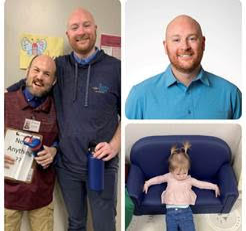
Second, one of our consumers dressed up and went as a version of me for Halloween 2024. Providing a little bit of back story, I always carry a water bottle around with me everywhere that I go. This includes when I make rounds around our office, checking in with everyone and asking if they “need anything?”. I’m not the biggest fan of Halloween myself, but seeing the consumer so happy and proud of himself will stick with me forever. Truly an unforgettable and incredibly proud moment for me!


Thank you so much, Corey, we appreciate your passion for helping others, both personally and professionally.   So much that some want to literally be JUST LIKE YOU!  

“If you want happiness for a lifetime, help somebody else.”~ Chinese Proverb


And thank you to each of you, we couldn’t provide the quality support to those we work with without your commitment!


Please remember, if you are interested in introducing yourself in a future spotlight or have a colleague who you would like to nominate and recognize, please reach out and I can provide the information to you.


Have a great weekend!

What is Stress?

Stress is the body’s natural response to challenges and demands. It can be triggered by various factors, including work, relationships, financial concerns, and major life changes. While short-term stress can be helpful in motivating action, chronic stress can negatively impact physical and mental well-being.

While stress is universal and typically happens in common ways, we all experience stress differently based on disposition and life experiences. This means we all have different factors that induce stress and different tools will work differently for us all. It is crucial that we all take a mindful look at what our stress inducers are as well as what soothes us or exacerbates distress
in our life.

Types of Stress

Acute Stress: Short-term stress that arises in response to an immediate threat or challenge.

Chronic Stress: Long-term stress resulting from ongoing pressures and difficulties.

Episodic Acute Stress: Frequent episodes of acute stress, often experienced by people who take on too many responsibilities.

Psychological Stress

Psychological stress occurs when an individual perceives a situation as overwhelming or beyond their coping abilities. This type of stress can be caused by emotional distress, trauma, or excessive mental workload. Common signs include:

  • Persistent worry or racing thoughts
  • Feelings of helplessness or lack of control
  • Mood swings, irritability, or sadness
  • Difficulty concentrating or making decisions


Managing psychological stress involves cognitive-behavioral strategies, therapy, and mindfulness techniques to regulate emotions and reframe negative thinking patterns.

Effects of Stress

Stress can affect various aspects of life, including:

Physical Health: Headaches, muscle tension, fatigue, digestive issues, and a weakened immune system.

Mental Health: Anxiety, depression, irritability, and difficulty concentrating.

Behavioral Changes: Changes in eating or sleeping patterns, social withdrawal, and increased substance use.

Common Stressors

While we all have different things that produce stress in our bodies, minds and lives, they typically fall into some of the following common areas:

  • Work pressure and deadlines
  • Financial worries
  • Relationship conflicts
  • Health concerns
  • Major life transitions
  • Mental health concerns
  • Societal pressures, conflicts or distress

Effective Stress Management Techniques

Mindfulness and Meditation: Practicing deep breathing or guided meditation can help calm the mind.

Being in Nature: Regular exposure to nature has been show to reduce stress and overtime increase overall wellness.

Physical Activity: Regular exercise releases endorphins, which help reduce stress.

Healthy Diet: Eating a balanced diet with nutritious foods supports mental well-being.

Quality Sleep: Establishing a bedtime routine and maintaining good sleep hygiene can improve resilience to stress.

Time Management: Prioritizing tasks and setting realistic goals can prevent overwhelm.

Social Support: Connecting with friends, family, or support groups provides emotional relief.

Relaxation Techniques: Activities such as yoga, progressive muscle relaxation, and aromatherapy can promote relaxation.

Skills to Deal with Stress

Cognitive Reframing: Changing the way you perceive stressful situations by adopting a more positive perspective.

Problem-Solving: Identifying stressors and developing actionable solutions to address them.

Emotional Regulation: Practicing self-awareness and techniques such as journaling or deep breathing to manage emotions.

Assertiveness Training: Learning to communicate effectively and set boundaries to reduce unnecessary stress.

Relaxation Training: Engaging in activities that trigger relaxation responses, such as guided imagery or progressive muscle relaxation.

Self-Compassion: Being kind to yourself and recognizing that stress is a normal part of life rather than a personal failure.

Exposure to nature: Being in nature has proven to reduce stress, lower blood pressure, heart rate, muscle tension, and the production of stress hormones in the body, while also enhancing immune system function, self-esteem, reducing anxiety, and improving mood. Even just looking at nature scenes has shown to be able to help us feel more relaxed and increases activity in areas of the brain associated with empathy and altruism. Spending time in natural settings is linked to reductions in stress, anger, fatigue, and depression, and increases in happiness and wellbeing.

Building Long-Term Resilience

Practice Gratitude: Keeping a gratitude journal can shift focus from stressors to positive aspects of life.

Develop Healthy Boundaries: Learning to say “no” and setting limits can prevent burnout.

Engage in Hobbies: Creative and enjoyable activities provide an emotional outlet.

Seek Professional Help: Therapists and counselors can offer strategies for managing chronic stress.

Resources for Stress Awareness Month

National Institute of Mental Health (NIMH): www.nimh.nih.gov – Information on stress and mental health.

American Psychological Association (APA): www.apa.org – Articles and resources on stress management.

Mindful.org: www.mindful.org – Guided mindfulness exercises and stress reduction tips.

Centers for Disease Control and Prevention (CDC): www.cdc.gov – Public health guidance on stress and coping.

The Stress Management Society: www.stress.org.uk – Practical tips and resources for stress relief.

Take Action This Stress Awareness Month

Throughout April, take small steps to manage stress effectively. Identify personal stressors, implement stress-relief techniques, and reflect on what works best for you. Building resilience takes time, but with consistent effort, managing stress can become an achievable part of daily life.

Engage in our Clarvida Stress Awareness Month: Daily Self-Driven Activity Handout and share your experience! By way of connecting, we are helping ourselves and other move from distress to de-stress!